
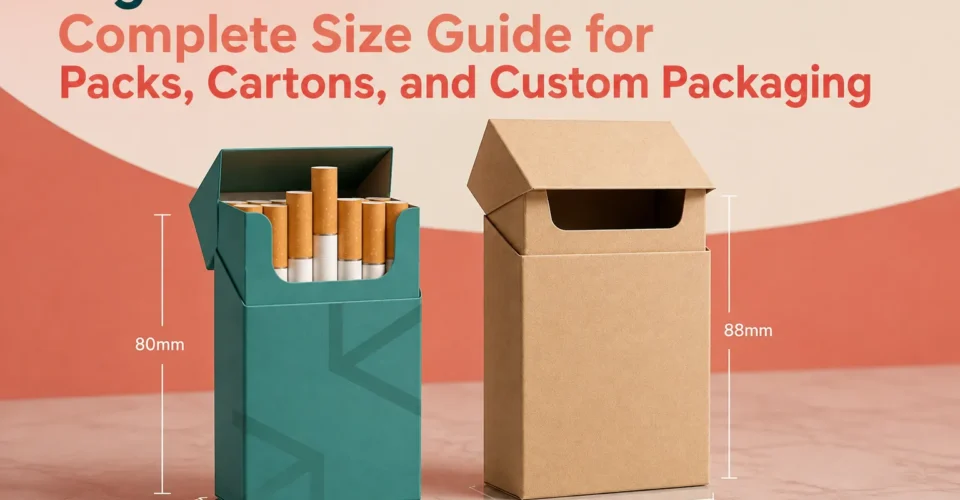
The correct size of the cigarette box is important. Whether you are customizing a box for a standard 20 cigarette pack, a large carton for wholesale cigarettes distribution, or simply something different, a perfect size helps you get your objectives clearly. Accurate size saves time, gives perfect presentation, and legal compliance.
Now, well- designed properly sized boxes propel customers in. Businesses must design a box with a different approach. They must target the intended use of packaging (protection), quite purposefully. This way, a cigarette box cast a spell all around. It’s become more than a cigarette holder that stays in the pockets, rather becoming a style statement that boosts sales and media presence.
This guide explains standard cigarette box sizes, carton dimensions, measurement methods, popular pack styles, material choices, and key design factors to consider before producing custom cigarette packaging.
What Are Standard Cigarette Box Dimensions?
A standard cigarette box usually holds 20 cigarettes and commonly measures around:
8.5 cm × 5.5 cm × 2.2 cm
3.35 in × 2.16 in × 0.86 in
85 mm × 55 mm × 22 mm
These dimensions are used for the king and regular sized cigarette boxes. However, cigarette box sizes can vary according to a business needs, box style, cigarette boxes types (soft and card), complementary products (for example a free lighter), and several other factors.
For example, slim cigarettes, 100s, luxury hard packs, soft packs, and promotional cigarette boxes may require slightly different measurements. That is why packaging manufacturers usually confirm the exact product size before finalizing the dieline.
Cigarette Box Size Chart
| Cigarette Packaging Type | Common Capacity | Approximate Dimensions |
| Standard cigarette pack | 20 cigarettes | 85 × 55 × 22 mm |
| King-size cigarette pack | 20 cigarettes | 85 × 55 × 22 mm |
| 100s cigarette pack | 20 cigarettes | 95–100 × 55 × 22 mm |
| Slim cigarette pack | 20 cigarettes | 90–100 × 45–50 × 18–22 mm |
| Soft cigarette pack | 20 cigarettes | Similar to standard pack, but flexible |
| Hard flip-top pack | 20 cigarettes | 85 × 55 × 22 mm or custom |
| Small cigarette pack | 10 cigarettes | Varies by region and brand |
| Cigarette carton | 10 packs / 200 cigarettes | Around 270 × 85 × 55 mm |
These are general sizing references. Final cigarette box dimensions should always be tested with the actual cigarette length, diameter, foil wrap, inner paper, and closure style.
How to Measure a Cigarette Box Correctly
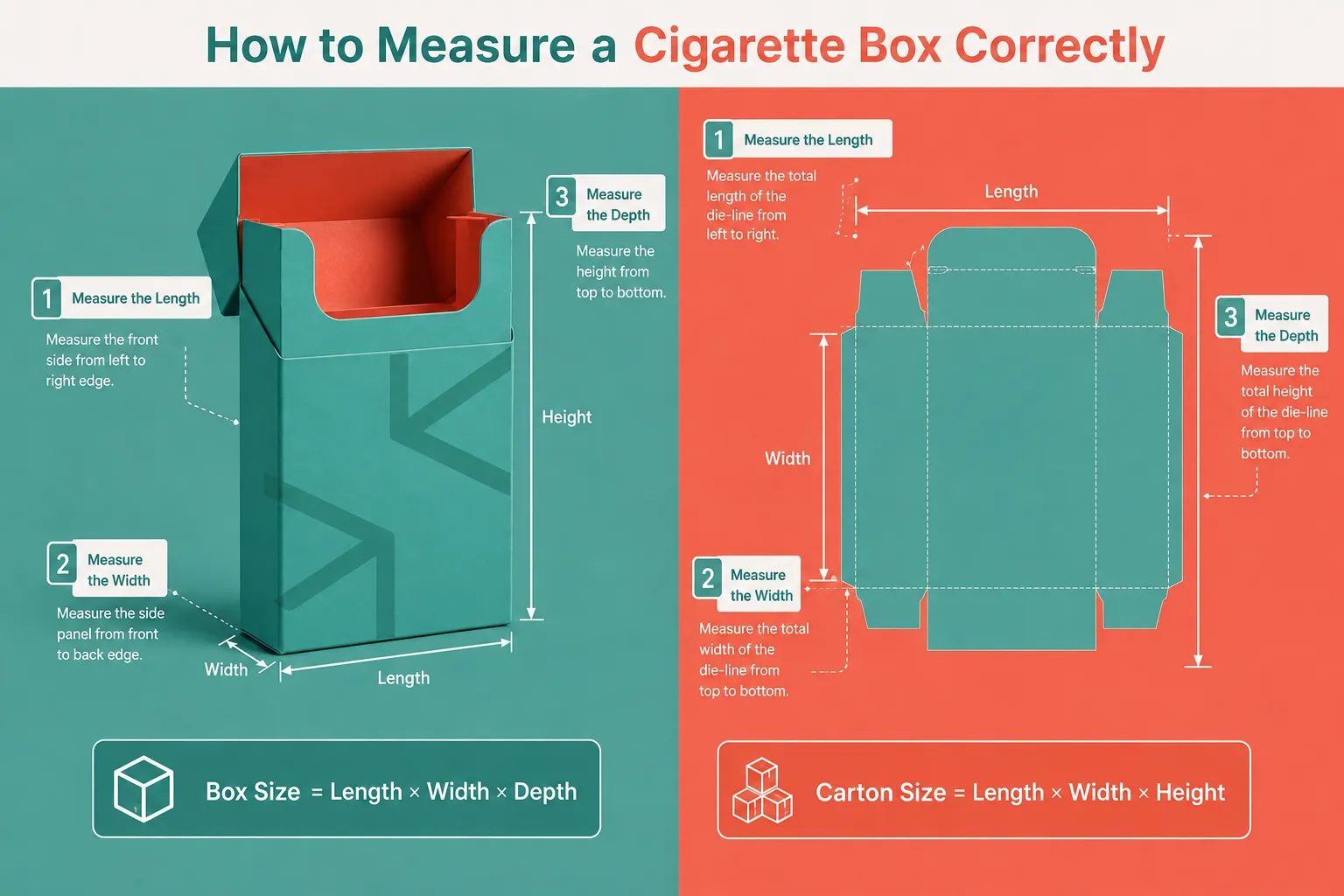
You can directly tell how many cigarettes you want to accommodate in one pack. What is your cigarette size, or what design do you prefer? These important details are usually transformed into an artistic creation by skillful hands and creative minds of packaging designers.
Still, here is the breakdown of the step you must follow to measure the size of a box:
Step 1: Measure the Length
Length is the longest side of the box. In most cigarette packs, this usually relates to the height of the cigarettes inside.
Step 2: Measure the Width
The next step must be to measure the front side of the box. It’s the display panel that shows your marketing details like brand names,
Step 3: Measure the Depth
It is the thickness of the box. This determines how many cigarettes can fit inside and how compact the pack feels in the hand or pocket.
The basic formula is:
Box Size = Length × Width × Depth
For cartons, the formula remains the same:
Carton Size = Length × Width × Height
When measuring for production, always measure the outer box dimensions and also consider inner space. The board thickness, folding panels, glue flaps, foil wrap, and inserts can reduce the usable internal area. For more precise measurements see our post How to Measure Your Product Dimensions for a Perfect Box?
Standard Cigarette Carton Dimensions
A cigarette carton usually contains 10 individual packs, which equals 200 cigarettes. A common cigarette carton size is approximately:
270 mm × 85 mm × 55 mm
27 cm × 8.5 cm × 5.5 cm
Carton dimensions may change depending on how the packs are arranged inside. Some cartons are designed for horizontal retail stacking, while others are made for easier shipping and bulk handling.
A good cigarette carton should be strong enough to protect multiple packs, easy to open, simple to stack, and suitable for printing required brand and compliance information. The size of a cigarette box also depends on what you are packing inside or simply How Many Packs of Cigarettes are in a Carton.
Why Cigarette Box Dimensions Matter
Accurate cigarette box dimensions are important for several practical reasons.
- First, the box must protect the cigarettes. Cigarettes are delicate and can bend, break, or lose shape if the packaging is too loose or too tight. A properly measured box keeps them secure during handling, shipping, and retail display.
- Second, correct dimensions improve shelf presentation. Retail tobacco products are often displayed in limited space. A pack that is too large may not fit properly, while a pack that is too small may look weak or low-value.
- Third, dimensions affect printing and branding. Every panel must be measured correctly so the logo, warning label, barcode, product details, and decorative design appear in the right position.
- Fourth, packaging dimensions influence cost. Oversized packaging uses more material, increases shipping volume, and may raise production expenses. A well-optimized box reduces waste while still protecting the product.
Finally, cigarette packaging must follow applicable laws. In many markets, warning labels and health information require specific placement and space. Incorrect panel sizing can create compliance problems.
Common Cigarette Pack Styles
Hard Pack
A hard pack is one of the most common cigarette packaging styles. It is usually made from paperboard and includes a flip-top lid. Hard packs offer better protection than soft packs and provide a premium feel.
They are popular because they maintain shape, protect cigarettes from pressure, and provide strong branding space on the front, back, sides, and top flap.
Soft Pack
A soft pack is made from flexible paper-based packaging. It is lighter and less rigid than a hard pack. Some consumers prefer soft packs because they are compact and easy to carry.
However, soft packs offer less crush protection, so they may not be ideal for premium or export-focused cigarette packaging.
Flip-Top Box
The flip-top cigarette box is widely used because it is convenient, secure, and familiar to customers. The lid opens from the top and closes neatly after use.
This style works well for standard cigarette packs, king-size packs, and many luxury tobacco brands.
Slide Box
A slide cigarette box has an inner tray that slides out from an outer sleeve. This style is often used for premium, limited-edition, or gift-style cigarette packaging.
Slide boxes can create a more refined unboxing experience, but they may require more material and precise dieline engineering.
Display Box
Cigarette display boxes are used for retail counters and shelves. They are designed to hold multiple packs and present them in an organized way.
A display box must be strong, attractive, and easy for retailers to refill.
Factors That Affect Cigarette Box Dimensions
Cigarette Length
The length of the cigarette is an important factor that describes the cigarette box dimensions. For example regular, king-size, and 100s cigarettes all different in sizes so the dimensions of its box also varies.
Cigarette Diameter
Just like the length of the cigarettes, its diameter also impacts the size of cigarette box dimensions. For a snug-fit preparation, the diameter and the number of the cigarettes per pack is considered to find out the total dimensions.
Number of Cigarettes
Most cigarette packs contain 20 cigarettes, but some markets use 10-pack, 25-pack, or custom-count packaging. The higher the count, the more internal space is required.
Packaging Material
Packaging materials used to make the box dimensions is also one of the considerable factors for measuring the exact cigarette box dimensions. The thickness of different packaging materials such as Kraft paper, rigid boards, and cardboard paper varies greatly. Choosing the right strength and thickness of paper used to make each box is also measured.
Inner Wrapping
In a cardboard box, the cigarette gets soggy. There must be some inner wrapping that prevents humidity or moisture to spoil the cigarette quality. These inners also require extra space inside the pack. This way, the inner wrapping also greatly impacts the dimensions.
Legal Requirements
Visual warnings, ingredients list, barcodes and tax stamps, and price tags are some of the very important things to consider while designing a cigarette box. The box of cigarettes must be of suitable size to provide ample space from these contents to get published..
Branding Goals
Like all regulatory and safety requirements, marketing goals are also important to design a well-planned packaging for cigarettes. The final dimensions of a box also depends on the branding goals. Whether a brand prefers slim, luxury, or bold packaging, all these matters to the final box creating process.
Best Materials for Cigarette Boxes
Different materials are used to make cigarette boxes. Some have featured eco-friendly nature, others are strong enough to prevent the product from storage and travelling mishandling.
Here are some choices:
- Paperboard is the most common material for cigarette boxes. It is lightweight, printable, foldable, and suitable for high-volume production.
- Kraft paper is often used for eco-conscious packaging. It gives a natural appearance and can be recyclable or biodegradable depending on the production process.
- Cardstock works well for custom cigarette boxes because it supports sharp printing, embossing, debossing, and finishing options.
- Rigid board is used for premium or luxury cigarette packaging. It is thicker and stronger than regular paperboard, but it costs more and is usually used for special editions.
- Corrugated board is more common for cigarette cartons, shipping boxes, and wholesale packaging rather than individual packs.
Printing and Finishing Options
Custom cigarette boxes can be upgraded with several printing and finishing methods.
- Matte coating gives the box a smooth, modern, non-shiny appearance.
- Gloss coating creates a bright and polished look.
- Soft-touch lamination gives the packaging a premium feel.
- Foil stamping can highlight logos, borders, or brand names.
- Embossing raises selected design elements for a textured effect.
- Debossing presses the design into the surface for a subtle luxury finish.
- Spot UV adds shine to specific areas while keeping the rest of the box matte.
- These finishing options should be planned carefully because cigarette packaging often has limited design space due to legal warning requirements.
Compliance Considerations for Cigarette Packaging
Cigarette packaging is highly regulated in many countries. Before printing any cigarette box, brands should confirm the rules for their target market.
Important compliance areas may include:
- Health warning size and placement
- Government warning text
- Graphic warning requirements
- Tax stamp area
- Barcode placement
- Age restriction symbols
- Ingredient or manufacturer information
- Plain packaging rules in some countries
- Tamper-evident or child-resistant requirements where applicable
In the United States, FDA guidance states that required cigarette warnings must appear prominently on the front and rear panels of cigarette packages. This makes accurate panel sizing especially important during design and printing.
Because tobacco laws vary by country, state, and product type, always review local regulations before approving final artwork.
How to Choose the Right Cigarette Box Size
Choosing the right cigarette box size starts with the product itself. Measure the cigarette length, diameter, and total count first. Then decide whether the pack will be hard, soft, flip-top, slide-out, or custom.
After that, consider the retail environment. A box made for convenience stores may need to fit standard display racks, while a premium box may focus more on presentation and finishing.
Next, plan the artwork. The front, back, sides, top, and bottom panels must have enough room for branding and legal information. Never finalize dimensions before checking warning label placement, barcode size, and folding areas.
Finally, request a sample before bulk production. A physical prototype helps confirm fit, opening style, printing position, and overall appearance.
Mistakes to Avoid When Designing Cigarette Boxes
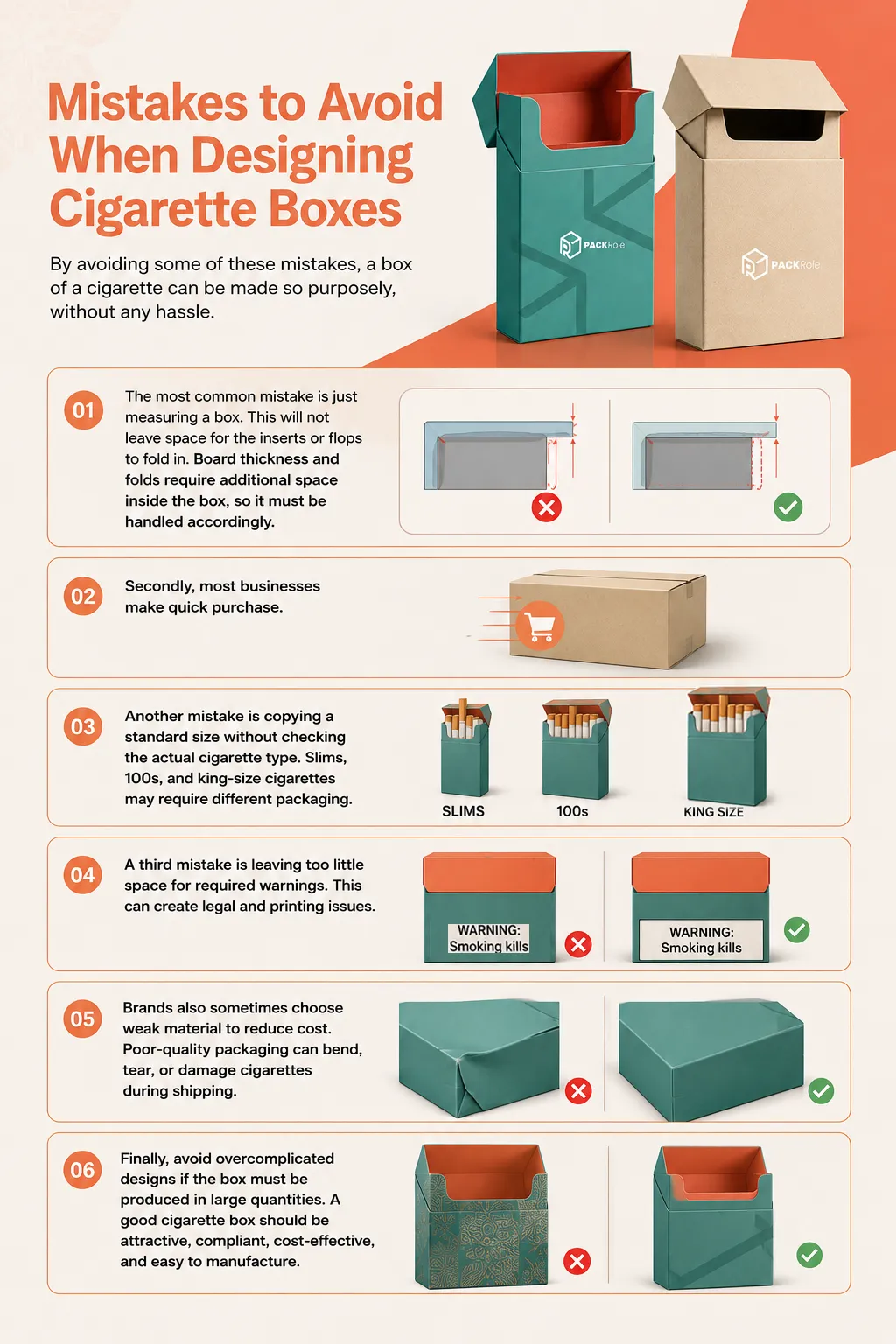
By avoiding some of these mistakes, a box of a cigarette can be made so purposely, without any hassle.
The most common mistake is just measuring a box.
- This will not leave space for the inserts or flops to fold in. Board thickness and folds require additional space inside the box, so it must be handled accordingly.
- Secondly, most businesses make quick purchase
- Another mistake is copying a standard size without checking the actual cigarette type. Slims, 100s, and king-size cigarettes may require different packaging.
- A third mistake is leaving too little space for required warnings. This can create legal and printing issues.
- Brands also sometimes choose weak material to reduce cost. Poor-quality packaging can bend, tear, or damage cigarettes during shipping.
- Finally, avoid overcomplicated designs if the box must be produced in large quantities. A good cigarette box should be attractive, compliant, cost-effective, and easy to manufacture.
Custom Cigarette Box Dimensions
Custom cigarette box dimensions are useful when a brand wants a unique appearance or needs packaging for a special product size.
Custom boxes can be made for king-size cigarettes, 100s cigarettes, slim cigarettes, luxury cigarette packs, limited-edition tobacco packaging, promotional packs, cigarette cartons, retail display boxes, child-resistant cigarette boxes or eco-friendly cigarette packaging.
The best custom cigarette packaging balances three things: product fit, brand presentation, and legal compliance.
Final Thoughts
Calculating the cigarette box dimensions may seem easy, but it’s essential to make a box that uplifts a brand’s reputation. A right size saves space, packaging material, and supports the product inside. It enhances shelf appearance, reduces waste, and shows professionalism.
A standard 20-cigarette pack usually measures around 85 × 55 × 22 mm, while a standard 10-pack carton is commonly around 270 × 85 × 55 mm. However, these measurements can change based on cigarette type, pack style, material thickness, and market regulations.
Before starting customization of these cigarette boxes it’s important to measure the size of cigarettes. The size of a cigarette box is determined by calculating various factors, such as how much space is required for inserts, how to protect the product from being soggy, and what legal regulations are necessary to follow about cigarette packaging. So trust a reputed USA manufacturer and start customizing today!
FAQs
What is the standard size of a cigarette box?
The standard size of a cigarette box is 85 x 55x 22 mm, which also means 8.5 x 5.5x 2.2 cm. This is the standard size for a 20 cigarette pack.
What are cigarette box dimensions in inches?
A standard cigarette box is approximately 3.35 × 2.16 × 0.86 inches.
How many cigarettes are in a standard pack?
Mostly a standard pack contains 20 cigarettes, but it largely varies from county to country.
What is the size of a cigarette carton?
The size of a carton for a pack may change from 10 packs to 200 packs. Generally, brands customize a carton of size 270 × 85 × 55 mm.
Are cigarette box sizes the same in every country?
No. Cigarette box sizes vary by region, brand, cigarette type, and legal packaging requirements.
What is the difference between a hard pack and a soft pack?
A hard pack is made from rigid paperboard and usually has a flip-top lid. A soft pack is made from flexible paper-based material and offers less crush protection.
Can cigarette boxes be customized?
Yes. Cigarette boxes can be customized by size, shape, material, printing, finish, and opening style. However, custom designs must still follow applicable tobacco packaging laws.
What material is best for cigarette boxes?
Paperboard is the most common material because it is lightweight, printable, and suitable for mass production. Kraft paper, cardstock, rigid board, and corrugated board may also be used depending on the packaging type.
Why are accurate cigarette box dimensions important?
Accurate dimensions ensure the cigarettes fit properly, the box folds correctly, the artwork aligns with each panel, and the final packaging meets retail and compliance needs.
Should I make a sample before bulk production?
Yes. A sample helps confirm product fit, box strength, opening style, print placement, and overall packaging quality before mass production.